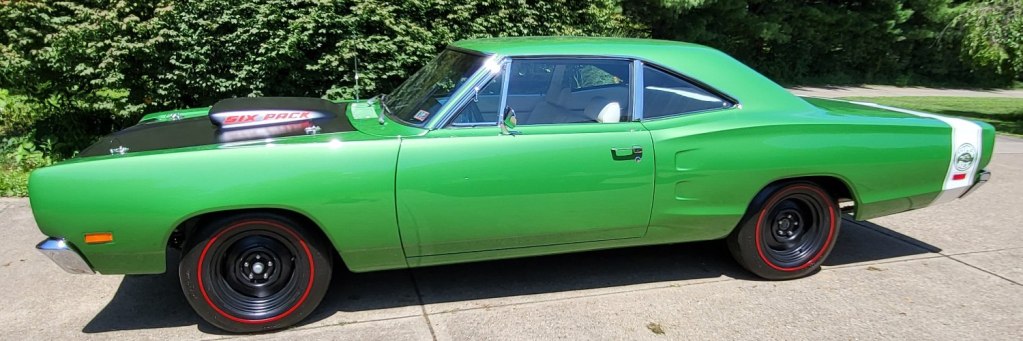
About 4 years ago, I fell victim to a wave of nostalgia and bought a 1969 1/2 M-Code A12 Dodge Super Bee. The idea: Put it back to exactly the way it was the day it rolled off the showroom floor. Recreate it down to the last nut. I hadn’t really immersed myself into a restoration since my ’83 Mustang GT, and the new project was to be handicapped without access to my BIL Mark; one of the best wrench guys I know. But the Spirit of Cars Past told me it was time to get back at it, and I try to listen when the Spirit moves me.
I’ve owned countless Fords, a Honda Accord, a bunch of Toyotas, a Ram 1500, a Continental Mark IV, a BMW M6, and a 1983 Renault. But never a MOPAR. So, there was the allure of learning something new.
Funny side-story about the Renault. It was one of the short-lived (1980-1986) Fuegos — known at the time as “the Poor Man’s Porsche” owing to its zippy turbo, 4-speed manual, and glued-to-the-pavement handling. Imported from France, it generated Euro-car excitement for young American speed-obsessed enthusiasts. But my Fuego came to its end when its gas tank literally cracked in half at a seam, falling loose of its straps and crashing onto an interstate highway while I was driving it to work. That generated quite a bit of first responder attention and a lot of foam.
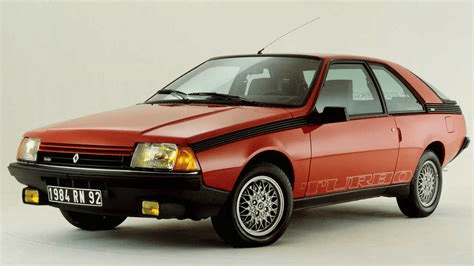
Oops, I lost my gas tank.
Those Fuegos were close to being something special. But for a few fatal flaws it could have been a contender.
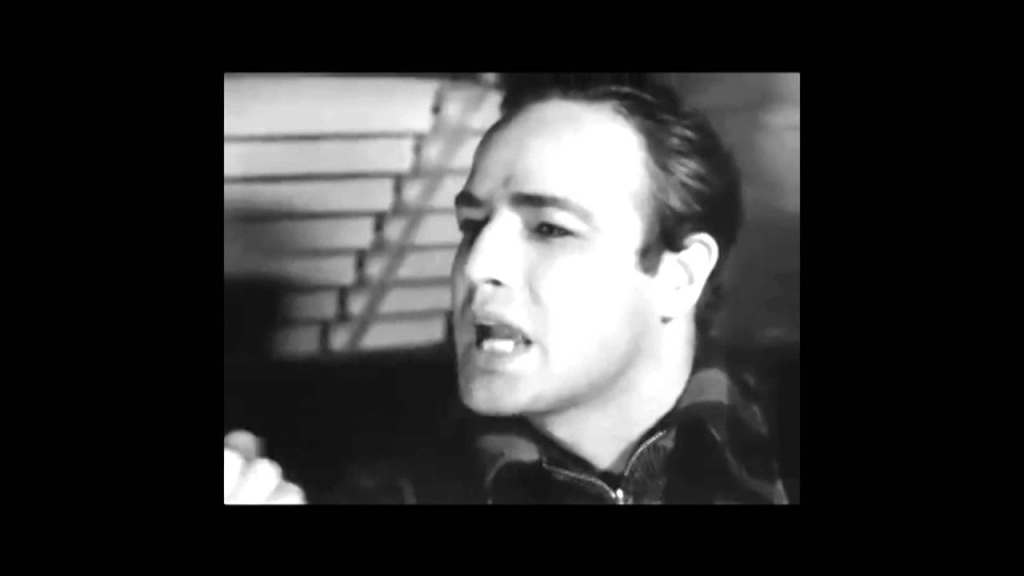
Brando, looking at my Fuego On the Waterfront.
Back to the main story. The body and interior of the Super Bee were pristine when I had it transported from Michigan. The driver of the carrier was a Chinese guy and spoke maybe 3 words of English. Somehow my wife, using a combination of hand gestures and wiggling (apparently some form of transcontinental language), managed to explain where he should unload it. Her input was critical, as I was suffering from an escalating case of Uber-Pissed-Off Syndrome and becoming less than constructive. He got it near to its final spot, and we pushed it the rest of the way into the garage.
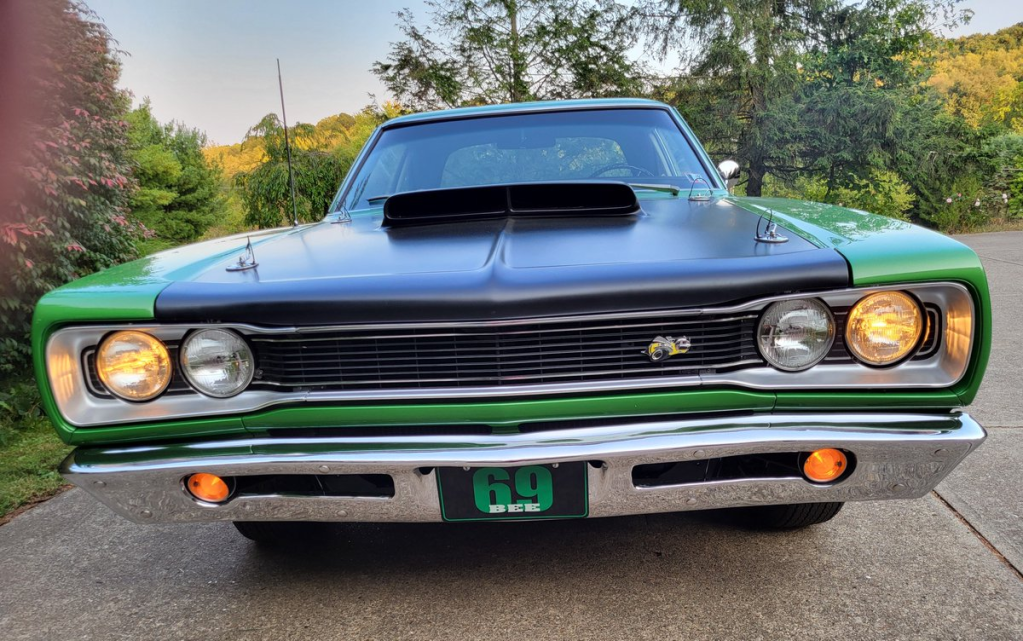
With finished aesthetics, the mechanicals were the focus. For background, it has a 440 c.i. Six Pack (3×2-barrel carbs) a 4-speed trans, a 4.10 rear end, and some of the worst drum brakes ever allowed on a motor vehicle. It took three years to replace the brakes, clutch, shift box, various electronic components, and more sets of spark plugs than I’d like to admit. The rear end was rebuilt. It remains 4.10 for originality, but those gears are too deep for comfortable daily driving. Since daily driving was never the point of this project, I decided that since it was born with 4.10’s, 4.10’s it shall remain.
And getting those three carbs to work in concert… Yikes. The center carb needed a rebuild, but the two auxiliary carbs were working just fine. There were more than a few times during the process when I thought, “F— it. Just put a Holley Sniper fuel injection kit on this thing and let’s go driving.” Thankfully nostalgia overruled my mental mutiny and the factory induction remained intact.
Then there was the wheels. It had the factory 15×6 wheels, outfitted with redline bias ply tires. They maintained authenticity for judging, but the car drove like a salmon slathered in Vaseline. People actually drove on these things back in the day? So, as pictured above, I ordered a new set of 1969-style wheels and dressed them with 15×7 redline all-American, stick-to-the-road radials. The wheels were mail-ordered, with the first three sets I ordered arriving with bent lips (thanks FedEx). The fourth time was the charm and the Bee was finally complete and ready for cruising. It wears the original wheels for showing, the wider radials for cruising. It’s a good compromise.
And don’t ask me about putting on Dodge dog-dish hub caps. They’re not for 69 1/2 A12 Bees, whose raw black wheels are as mean and righteous as a fist. They won’t be desecrated with dog dishes.
Another side story about those wheels. When the car was designed, the lug nuts on the driver’s side would unscrew themselves after a couple hundred miles of driving and turning. So the engineers decided the solution was to reverse-thread the lugs; making the wheels on that side “righty-loosy, lefty-tighty”. The expression doesn’t roll off the tongue as well as the original, but it’s important to remember when you’re wielding the impact wrench.
So here we are four years later. The Bee is running like a top, attending cruises and shows regularly, and feeding my nostalgia monkey. For a car set up like it was the day it was born on February 17, 1969, it’s surprisingly reliable. And of course it’s a straight-up blast to drive.
There are some flaws I’ll probably never get around to fixing. The clock in the Tic-Tok-Tach doesn’t’work. It’s always a little past 10 o’clock. The radio kind of works, drawing in one station. And the fuel gauge? Maybe you’ll get there, maybe you wont.
Nostalgia is a beautiful liar. It plays the heartstrings and makes you romanticize your memories. The Bee squeaks and rattles, the trunk is obstinate, the dash is hard 1960’s plastic, and (if your shorts are too short) you’ll be leaving the back of your thighs stuck to the vinyl seats on a hot day. It’s not what I pictured it when I first visualized it in my garage.
It’s actually better.
It brings me back to the 1969 experience. When interiors weren’t laser fitted, gauges were analog, and that little triangle-shaped window on the door just wouldn’t seal. Grabbing the walnut shift knob, depressing the creaky clutch pedal, and stomping on the floor button to get the high beams shining, it becomes less of a show car and more of a personal time machine. For a little while on a Saturday afternoon, you’re actually there.


Leave a comment